Every job below is one we do ourselves across Ontario.
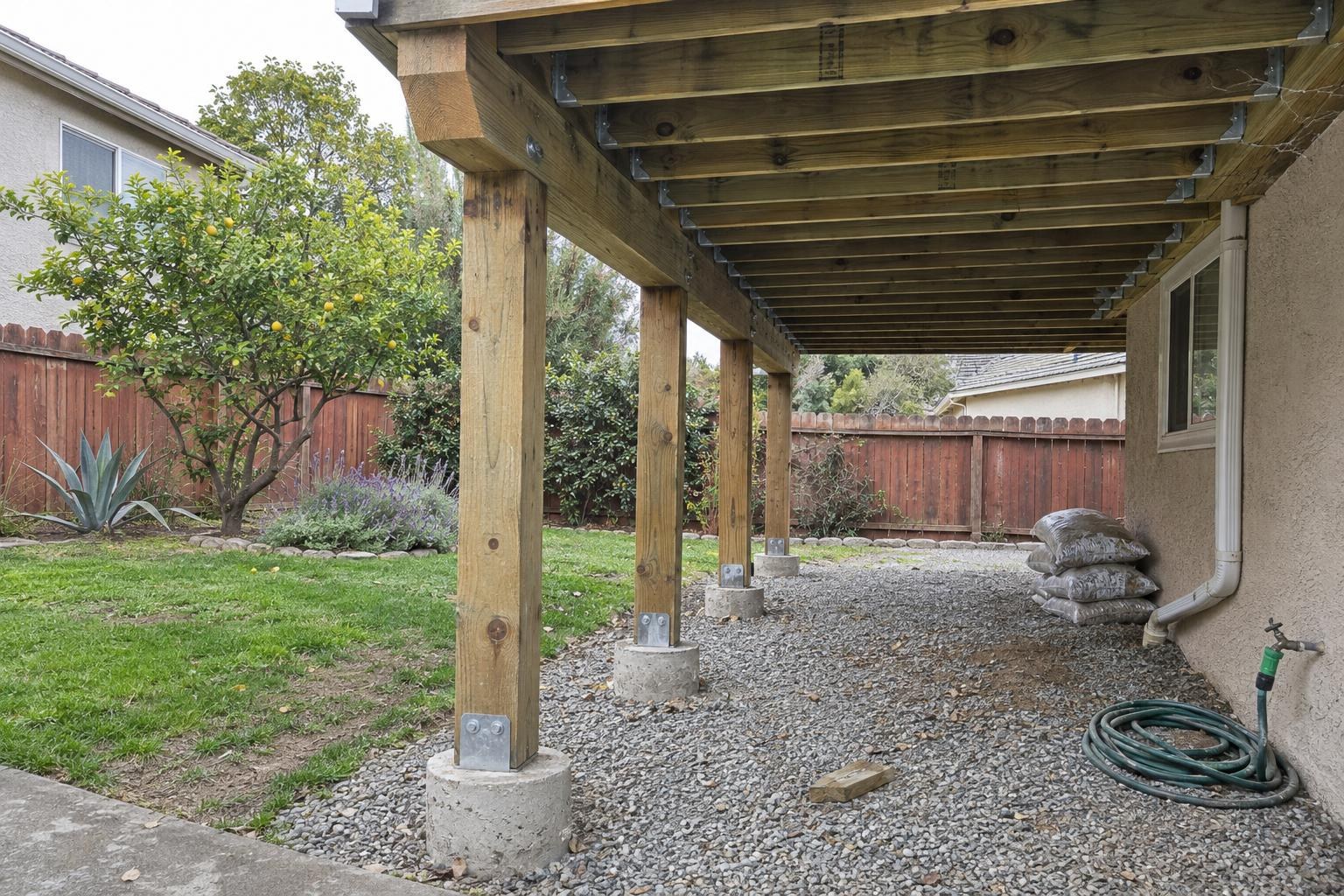
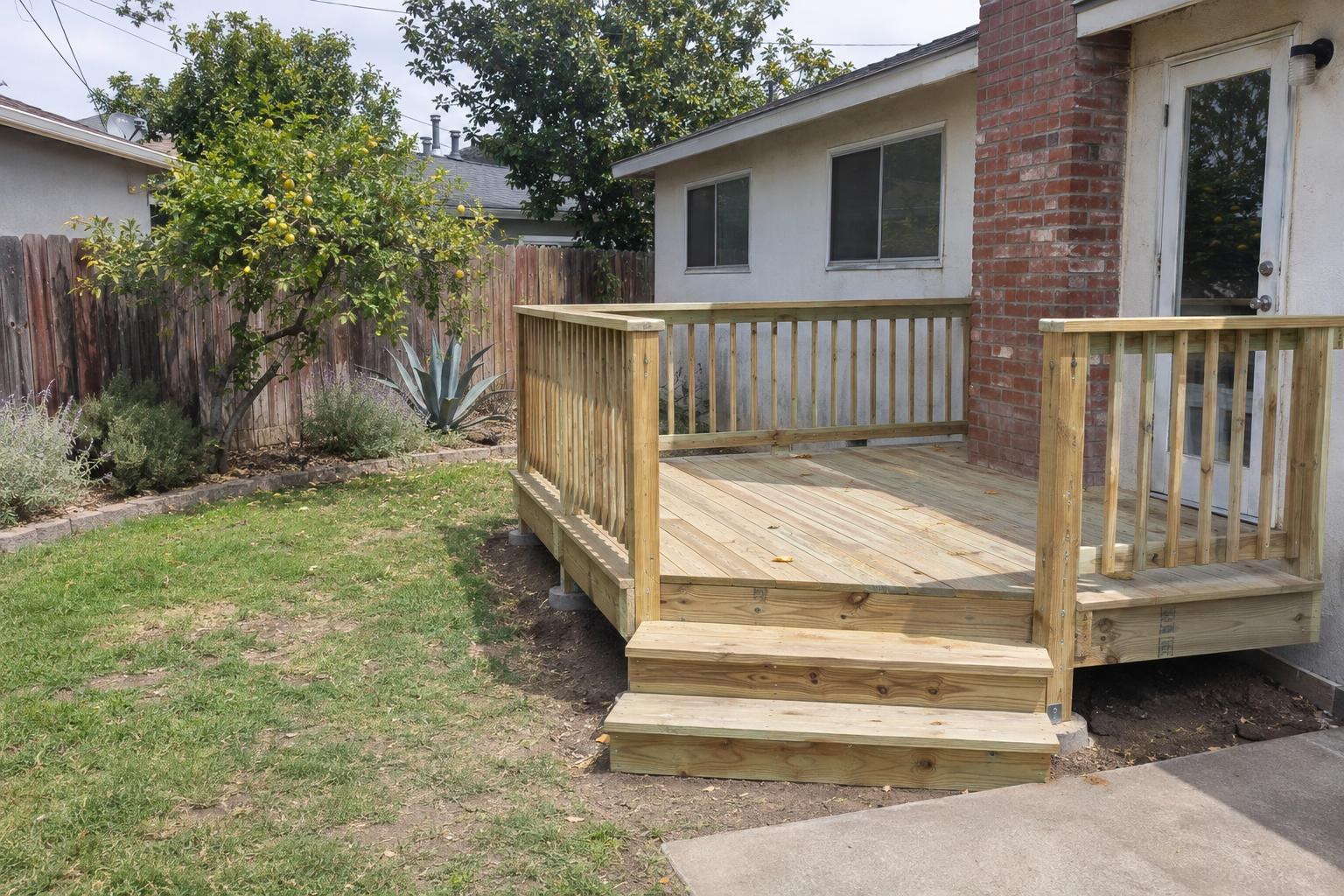
We frame new decks on concrete footings poured below grade, sized for the Inland Empire's clay soil so posts don't heave after a wet winter. Joists run 16 inches on center for wood decking and tighter for composite. We handle everything from a simple rectangle off the back door to a deck that wraps around the side of the house.
Some yards have a slope, a pool equipment pad, or a tree nobody wants cut down, and the deck has to work around it. We sketch the layout with you first, figure out where the stairs land and how the railing lines meet at the corners, before any lumber gets ordered. Multi-level decks and built-in bench seating both start here.
A deck that bounces when you walk across it usually has an undersized beam or a shifted post footing, not a problem with the decking itself. We pull boards to check the joists and ledger connection before we quote anything, because patching the surface over bad framing just hides the problem for a year. Rot at the ledger board, where the deck bolts to the house, is the most common repair we see.
Wood decking out here takes a real beating from UV, not just rain, and it'll gray and check within a year or two if it's left bare. We pressure wash, let the wood dry for a couple of days, then apply a penetrating stain and sealer rather than a film-forming paint that just peels later. Plan on redoing this every two to three years depending on sun exposure.
Composite boards don't require staining, but the framing underneath still has to be built to spec, including tighter joist spacing since composite sags more between supports than real wood does. We install with hidden fastener clips so there are no screw heads showing on the surface. It costs more up front than pressure-treated pine and you never touch it again.
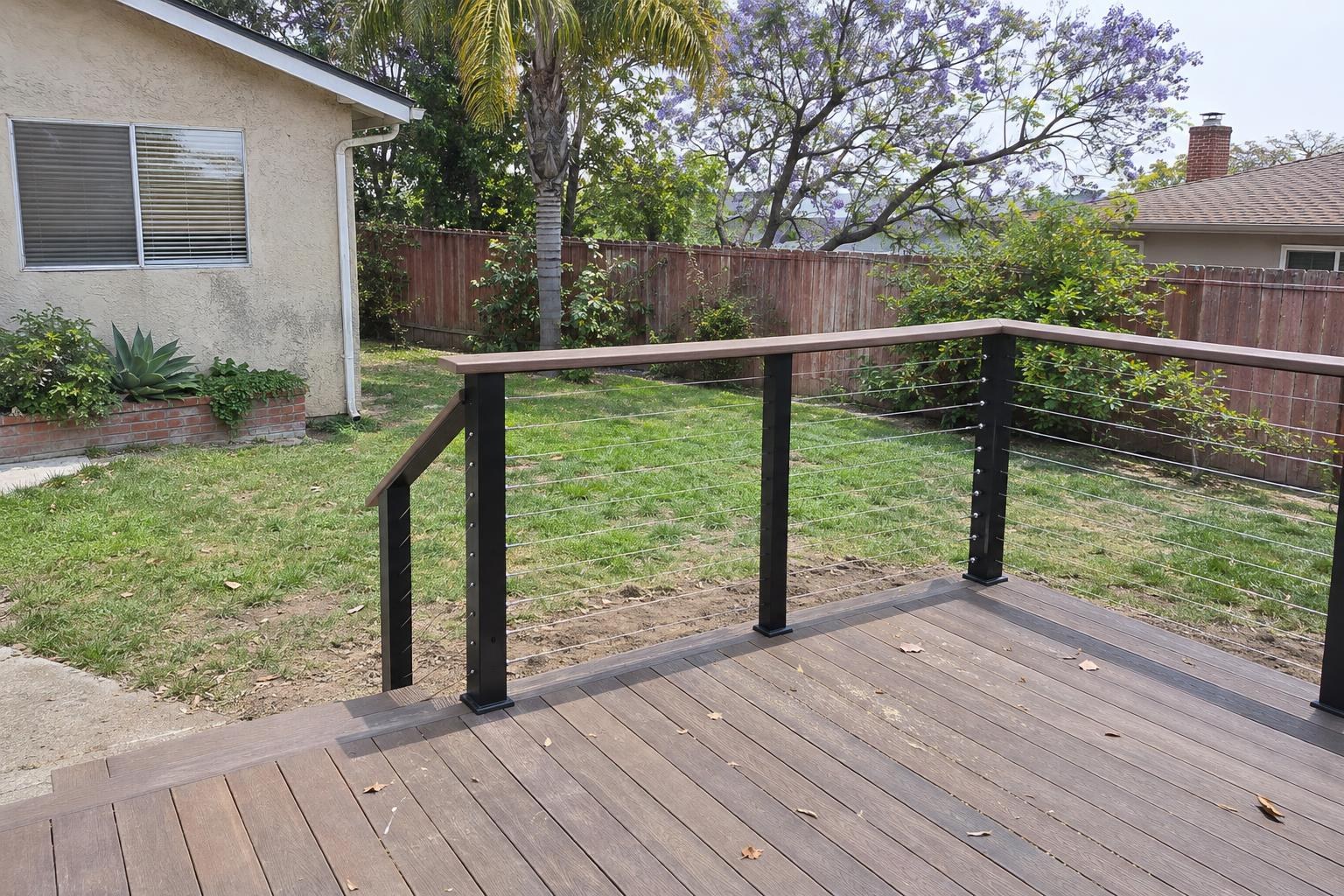
A railing that wobbles is almost always a loose post connection, not a problem with the balusters. We re-bolt posts to the framing with structural screws instead of the deck screws that were probably used the first time. Baluster spacing has to stay under 4 inches for code, and we check that on every repair even if nobody asked.
If the framing underneath is solid but the decking boards are cupped, splitting or full of popped nails, we strip the old boards and install new ones on the existing structure. This is usually faster and cheaper than a full rebuild. It's a good option for a deck that's ten to fifteen years old with framing that still checks out.
Sloped yards usually need more than one deck level connected by a short run of stairs. Each level needs its own beam and footing layout, and the stair stringers have to land on solid footings too, not just hang off the deck frame. We've built these on lots where the drop from the back door to the yard is five feet or more.
A lot of deck jobs around Ontario end with a pergola or shade structure, because an uncovered deck gets too hot to use most summer afternoons. We attach these to the deck framing directly, not just set posts in the ground next to it, so the whole structure moves as one unit. We can match the wood or composite trim to the deck itself.
Sometimes the old deck has to come out before anything new goes in, especially if the footings are in the wrong spot for the new design. We haul off the old lumber and sweep the yard for nails and screws before digging new footings. This is usually priced as part of a rebuild rather than billed separately.
Four steps, and no surprises in any of them.
You tell us what you want doing, we look at what is actually there, and we ask the awkward questions early.
In writing, itemised, free. If something might add cost later we flag it now rather than at the end.
Same crew throughout. We cover your floors, keep the dust down and tidy up before we leave each day.
You point out anything you are not happy with and we fix it before the invoice, not after.
Available for deck projects throughout Ontario and the surrounding cities below.
Questions that come up once a deck project actually gets going.
Describe the problem and we will tell you what it probably is. No obligation.